Circular construction living lab
A proposed learning environment for material recovery, reuse, efficient building methods and applied problem-solving.
Partners & Impact
A prospective platform for green skills, inclusive opportunity and accountable development partnership in Vihiga County.
Explore the conceptProposed flagship concept
The proposed M-GSCCA concept imagines an applied learning platform where conventional trades meet resource efficiency, digital design and practical climate responsiveness.
It is presented to invite dialogue, technical review and responsible co-development—not as a promise of facilities, funding or delivery.
Areas for co-development
A proposed learning environment for material recovery, reuse, efficient building methods and applied problem-solving.
Proposed practical learning around safe solar systems, installation awareness and maintenance pathways.
Proposed demonstration and training in responsible water use, piping and efficiency-oriented systems.
Proposed digital tools for technical drawing, design thinking, learning content and work readiness.
Proposed pathways connecting practical preparation with employers, mentors and supervised workplace experience.
Proposed approaches to participation, dignity, reasonable support and safer access to skills pathways.
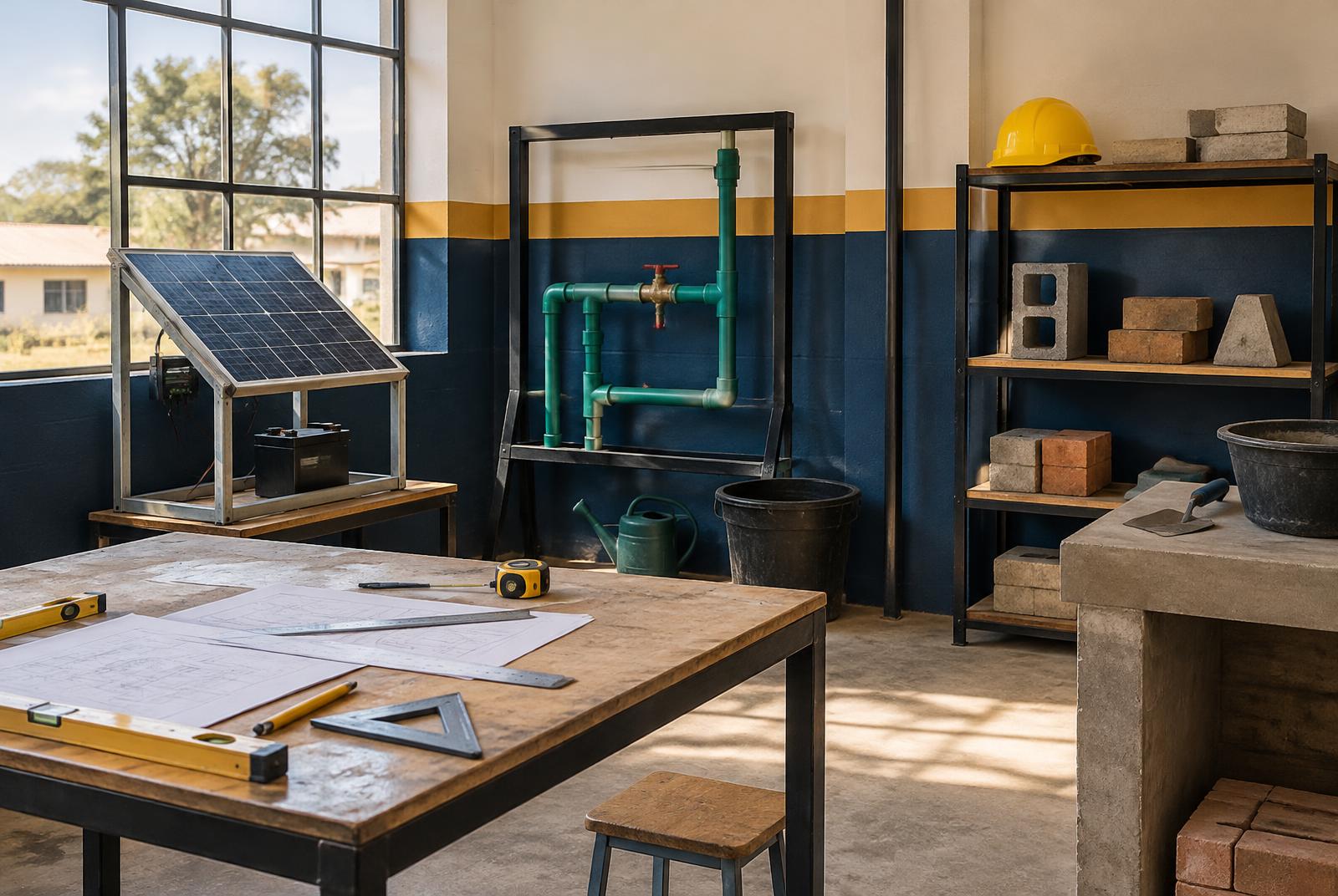
Circular construction living lab
The concept would connect masonry and plumbing practice with material awareness, design thinking, safe demonstration and locally relevant problem-solving.
Explore recovery and responsible reuse of suitable materials.
Demonstrate water-conscious and energy-aware building systems.
Link digital drawing and CAD concepts to practical fabrication.
Create supervised spaces for learners and practitioners to exchange knowledge.
Monitoring, evaluation & learning
If a concept moves forward, indicators, definitions, baselines, targets, consent and reporting responsibilities should be agreed with partners before implementation.
Potential indicators: enquiries, enrolment and completion, disaggregated appropriately and handled with privacy safeguards.
Potential indicators: skills demonstrated, transitions to further learning and appropriately verified workplace pathways.
Potential indicators: apprenticeship participation, employment transitions and enterprise activity, with clear definitions and follow-up periods.
Potential indicators: materials considered for reuse, demonstration-system performance and practical adoption of efficient methods.
No results, baselines or targets are reported here because the proposed Academy has not been implemented.
Responsible partnership
Clear roles, documented decisions, conflict-of-interest handling and proportionate oversight should guide any future collaboration.
Any future activity should use accessible reporting channels, safe recruitment and conduct expectations, survivor-centred referral, and special care for children and adults at risk.
Partners should agree what can be communicated, how resources and decisions are reported, and how claims are verified before publication.
Data collection should be purposeful, consent-aware, privacy-conscious and open to review, correction and learning.
Prospective collaborators
Musasa welcomes exploratory dialogue with organisations whose purpose and standards align with practical learning, inclusion and accountable local development.
Flightwork Group may be considered for proposed project-development and coordination support only. It is not presented as a confirmed funder or formal partner.
Partnership enquiry
Share your area of interest with info@musasatechnical.org. This prepares an email draft; it does not automatically send or store your enquiry.
Looking for student admissions?
Visit admissions